

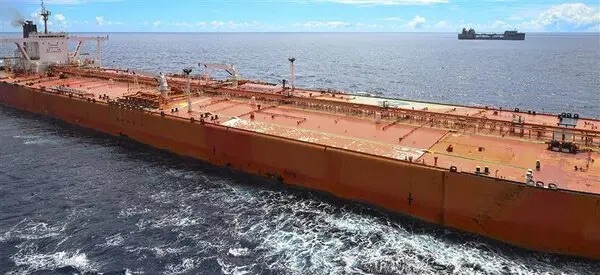
U.S. forces have boarded yet another tanker tied to Iran’s “shadow fleet,” signaling a continued escalation in the effort to cut off Tehran’s ability to evade sanctions and fund its global operations through illicit oil exports.
The vessel, identified as the M/T Tifani, was intercepted in the Indo-Pacific and boarded without incident, according to defense officials. It was suspected of moving Iranian crude through covert shipping channels—part of a growing network of reflagged and obscured vessels used to bypass Western sanctions.
Expanding Control of Strategic Sea Lanes
This latest boarding reflects a broader shift: U.S. enforcement is no longer geographically limited to the Persian Gulf. Operations are now reaching deep into international waters across major global trade routes, where “shadow fleet” vessels attempt to quietly move sanctioned energy supplies.
Officials with U.S. Central Command have indicated that ships linked to Iran’s illicit oil network may be subject to inspection and seizure regardless of location—an unmistakable signal that maritime enforcement is becoming more global in scope.
Targeting the Financial Lifeline
At the center of the strategy is Iran’s oil export system, which relies heavily on aging tankers, false registries, ship-to-ship transfers, and complex routing to obscure origin and destination.
U.S. officials say the goal is straightforward: dismantle the revenue stream that funds adversarial regimes and proxy networks by tightening control over the maritime choke points of global energy trade.
Strategic Pressure Is Building
The Tifani boarding follows a series of recent interdictions and diversions targeting vessels tied to Iran’s covert oil network. The pattern points to a sustained campaign rather than isolated enforcement actions.
While Washington frames these moves as sanctions enforcement, the broader reality is clear: maritime dominance is being used as an economic pressure tool in an intensifying geopolitical contest.
In practical terms, the message is simple—global energy flows are no longer operating outside the reach of U.S. enforcement power.