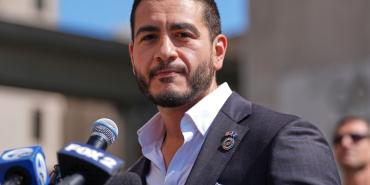



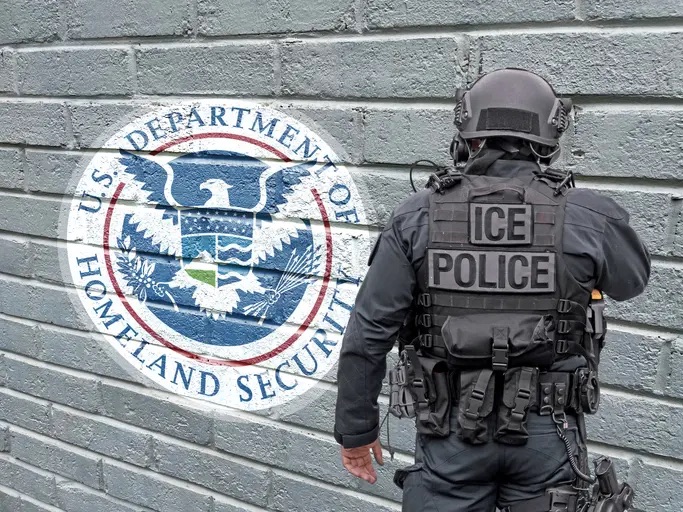
As the Department of Homeland Security (DHS) shutdown continues, a revealing admission from Rep. Glenn Ivey is highlighting what’s really at stake: the future of U.S. Immigration and Customs Enforcement (ICE).
Ivey acknowledged that—even without a deal—the shutdown has succeeded in making ICE a central political issue, signaling Democrats are using the crisis to push long-standing efforts to restrict the agency.
But ICE is not a political talking point—it’s a frontline national security force.
With more than 20,000 personnel, ICE is responsible for targeting transnational criminal organizations, dismantling human trafficking networks, combating drug smuggling, and removing dangerous individuals from U.S. communities. Its mission is rooted in protecting public safety and enforcing the rule of law—core functions of any sovereign nation.
Now, that mission is being leveraged in a political standoff.
As DHS funding remains stalled, ICE operations—and the broader security infrastructure they support—face increasing uncertainty. Meanwhile, Americans are already feeling the strain of the shutdown, from travel disruptions to reduced operational capacity across key security agencies.
Despite this, Democrats continue to push for new restrictions and oversight measures that critics argue would hinder ICE’s ability to do its job effectively at a time of heightened global and domestic threats.
Ivey’s remarks make one thing clear: this is no longer just a funding dispute. It’s a calculated effort to use crisis conditions to weaken an agency tasked with defending America’s borders, laws, and internal security.
In the end, this is about whether the United States can afford to sideline one of its primary defenses against crime, trafficking, and national security threats in the middle of a political fight.